
Yashoda Hospitals
Malakpet
Dr. Kalyan's Speciality Clinic
Hasthinapuram
Call Us
+91-7207897798
+91-9392172078
Malakpet
Hasthinapuram
+91-7207897798
+91-9392172078
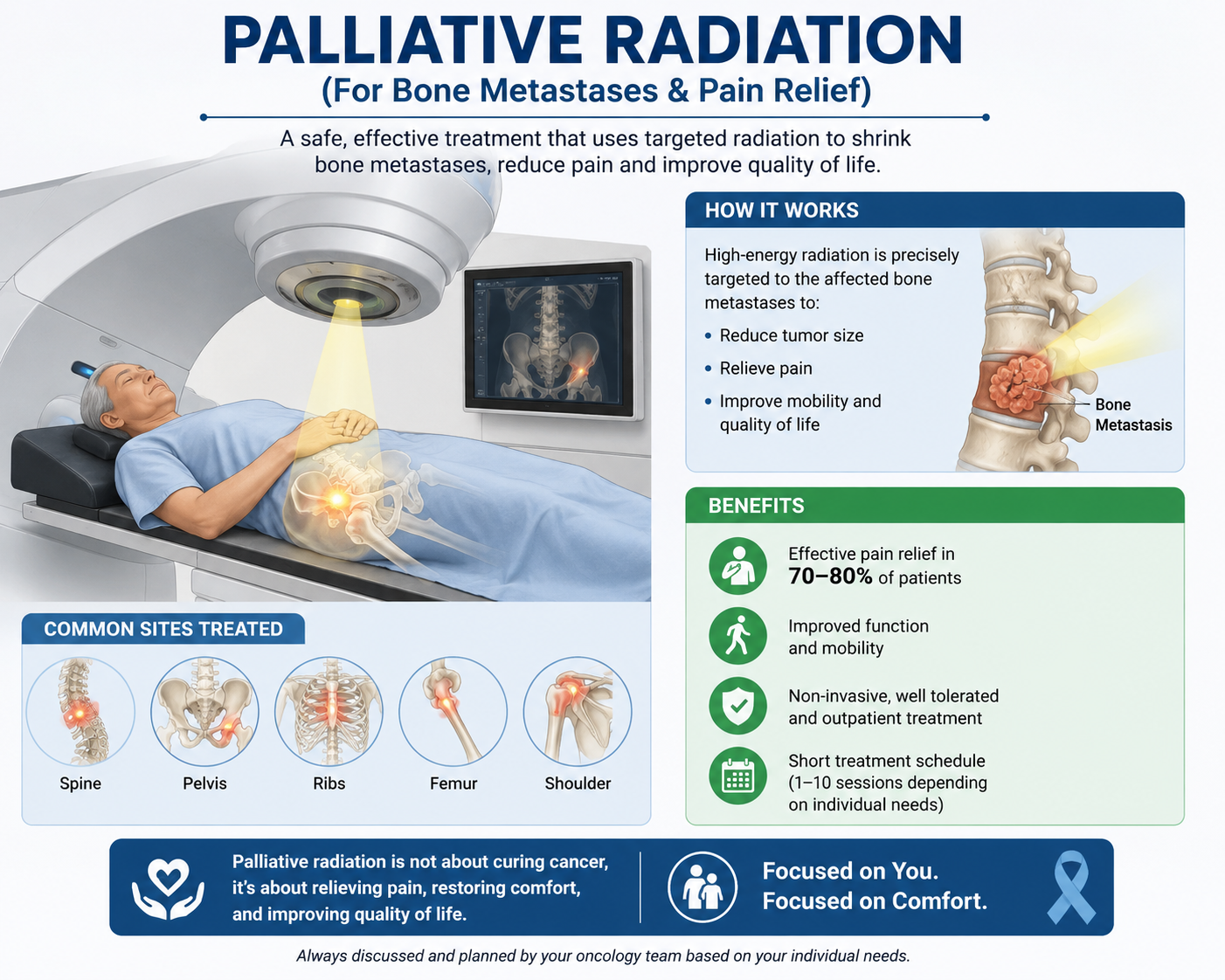
Palliative radiation therapy is a specialized form of radiation treatment designed to relieve symptoms and improve quality of life for patients with advanced cancer. When cancer spreads to the bones or other parts of the body, it can cause significant pain, discomfort, and reduced mobility. Palliative radiation helps shrink or control these cancerous lesions, reducing symptoms and allowing patients to maintain greater comfort and independence.
Unlike curative treatments that aim to eliminate cancer completely, palliative radiation focuses on symptom management and supportive care. It is commonly used for patients experiencing pain from bone metastases, pressure on nerves, bleeding tumors, or other cancer-related complications. The treatment is carefully planned to provide effective symptom relief while minimizing side effects and treatment burden.
Palliative radiation is typically recommended when cancer has spread beyond its original site and is causing symptoms that affect a patient’s daily life. Bone metastases are among the most common reasons for palliative radiation, particularly in cancers such as breast, prostate, lung, thyroid, and kidney cancer. As cancer cells spread to the bones, they can weaken the bone structure and cause persistent pain.
In addition to bone involvement, advanced cancers may create pressure on nearby nerves, organs, or the spinal cord, leading to pain, numbness, difficulty breathing, or other symptoms. Palliative radiation is used to target these areas and provide symptom relief, helping patients experience improved comfort and functionality.
Patients who may benefit from palliative radiation often experience ongoing pain that is difficult to control with medications alone. Bone pain may be constant or worsen with movement and can significantly affect sleep, mobility, and overall quality of life. Some patients may also experience swelling, tenderness, or weakness in the affected area.
Other symptoms that may indicate the need for palliative radiation include nerve compression causing numbness or weakness, spinal cord compression, bleeding from tumors, difficulty swallowing due to tumor growth, or breathing difficulties caused by cancer pressing on the airways. Early treatment can help prevent symptoms from becoming more severe and improve daily comfort.
Before recommending palliative radiation therapy, a comprehensive evaluation is performed to understand the extent of cancer spread and identify the source of symptoms. This process typically includes a detailed medical history, physical examination, and imaging studies such as X-rays, CT scans, MRI scans, PET scans, or bone scans.
The radiation oncology team carefully reviews the patient’s overall health, cancer stage, treatment history, and symptom severity. Based on these findings, an individualized treatment plan is developed to target the affected areas accurately while preserving surrounding healthy tissues as much as possible.
Palliative radiation therapy is highly personalized and can be delivered using different techniques depending on the location and size of the cancerous lesion. External beam radiation therapy is the most commonly used approach, where precisely focused radiation beams are directed at the affected area. Treatment may be delivered in a single session or over multiple sessions, depending on the patient’s condition and treatment goals.
For painful bone metastases, radiation therapy can significantly reduce pain and improve mobility within days to weeks after treatment. In cases involving spinal cord compression, nerve involvement, or bleeding tumors, radiation may help control symptoms and prevent further complications. Palliative radiation is often combined with other supportive treatments, including pain medications, targeted therapies, chemotherapy, hormone therapy, or bone-strengthening medications to achieve the best possible symptom control.
Following palliative radiation therapy, patients are monitored regularly to assess symptom improvement and overall well-being. Pain relief may begin within a few days for some patients, while others may experience gradual improvement over several weeks. Follow-up visits allow the treatment team to evaluate response to therapy and make adjustments to supportive care measures when needed.
Maintaining adequate nutrition, hydration, physical activity within comfort limits, and adherence to prescribed medications can support recovery and symptom management. Patients are encouraged to communicate any new or worsening symptoms so that appropriate interventions can be provided promptly.
Palliative radiation therapy is generally well tolerated, and side effects are usually related to the area being treated. Some patients may experience temporary fatigue, mild skin irritation, or localized discomfort during or shortly after treatment. These effects are typically manageable and improve with time.
Depending on the treatment site, patients may occasionally experience specific side effects such as nausea, swallowing discomfort, or temporary worsening of pain before improvement occurs. Serious complications are uncommon because treatment planning is carefully designed to minimize exposure to healthy tissues while effectively targeting symptomatic cancer areas.
Patients with cancer should seek medical attention if they develop persistent bone pain, unexplained weakness, numbness, difficulty walking, severe back pain, bleeding, breathing difficulties, or any symptoms that interfere with daily activities. These symptoms may indicate cancer progression or complications that require timely evaluation.
Early consultation with a radiation oncologist can help determine whether palliative radiation therapy may provide meaningful symptom relief and improve quality of life. Prompt treatment often leads to better symptom control, greater comfort, and enhanced overall well-being for patients living with advanced cancer.
Getting an accurate diagnosis can be one of the most impactful experiences that you can have.
Copyright © 2026 Dr. R. Nivalika, All rights reserved. Powered by PrigmaSoft Technologies
Getting an accurate diagnosis can be one of the most impactful experiences that you can have.
WhatsApp us