Nasopharyngeal CancerTreatment in Malakpet, Hyderabad
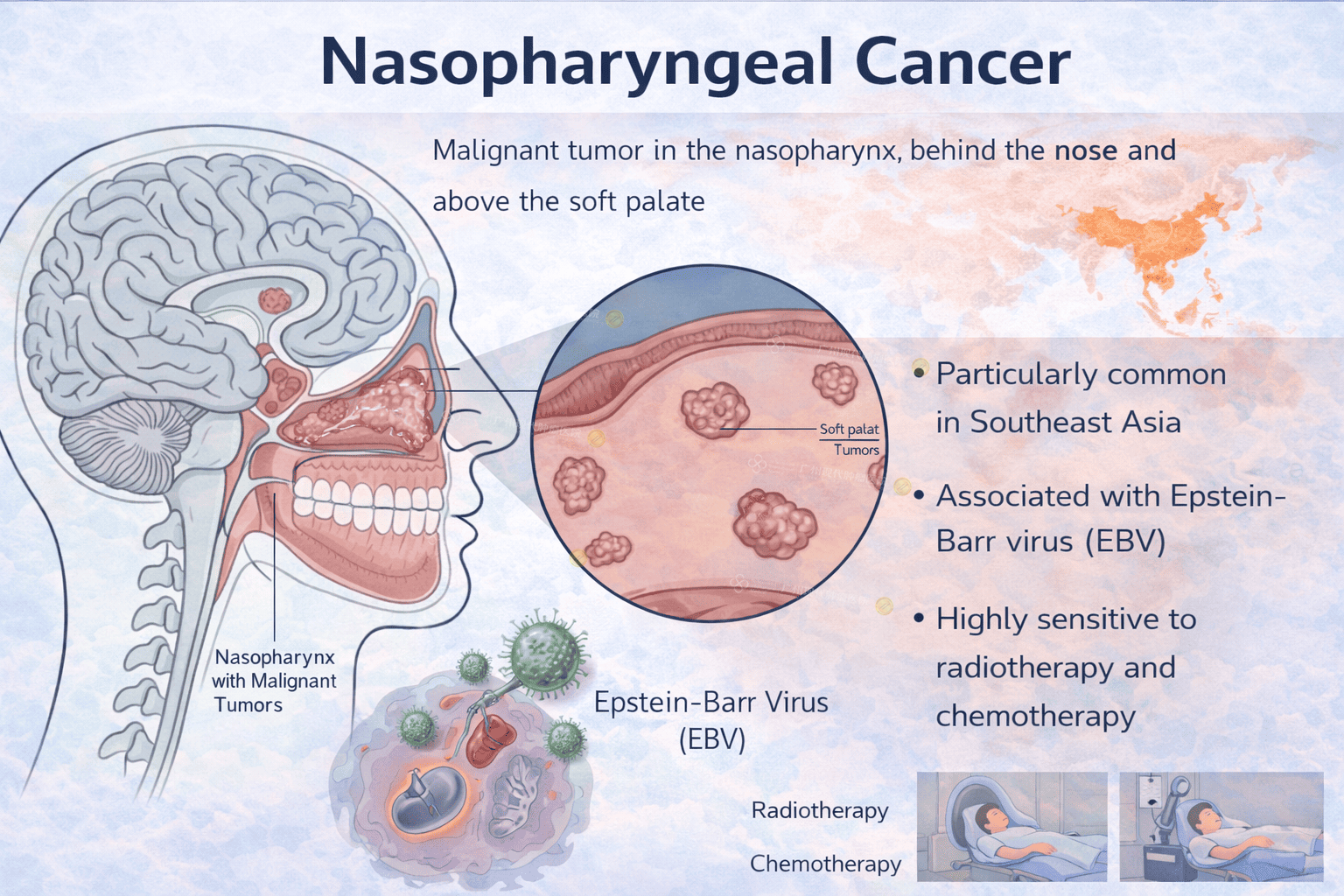
Nasopharyngeal cancer is a type of cancer that develops in the nasopharynx, the upper part of the throat located behind the nose and above the back of the throat. This area connects the nasal passages to the rest of the respiratory system. Nasopharyngeal cancer occurs when abnormal cells in the nasopharynx grow and multiply uncontrollably, forming a tumor. Risk factors may include Epstein-Barr virus (EBV) infection, genetic factors, tobacco use, and exposure to certain environmental substances. Early detection and proper treatment can significantly improve patient outcomes.
Radiation therapy is one of the primary treatments for nasopharyngeal cancer. It uses high-energy radiation beams to destroy cancer cells and shrink tumors while preserving surrounding healthy tissues. Radiation therapy is often combined with chemotherapy to improve treatment effectiveness, especially in advanced stages of the disease.
If you’re seeking Nasopharyngeal Cancer Treatment in Malakpet, Hyderabad, radiation therapy can be an essential part of a personalized treatment plan designed to effectively target cancer cells and support long-term recovery.
Here’s an overview of radiation therapy for nasopharyngeal cancer:
Radiation Therapy Purpose:
Radiation therapy is used to destroy cancer cells and shrink tumors in the nasopharynx. It is often the primary treatment for nasopharyngeal cancer and may also be used after other treatments to eliminate remaining cancer cells and prevent recurrence.
Types of Radiation Therapy:
The most commonly used treatment for nasopharyngeal cancer is External Beam Radiation Therapy (EBRT). Advanced techniques such as Intensity-Modulated Radiation Therapy (IMRT) allow doctors to deliver highly precise radiation doses to the tumor while protecting nearby healthy tissues and critical structures.
Radiation Planning:
Before treatment begins, doctors perform detailed planning using imaging tests such as CT scans, MRI scans, or PET scans. These tests help radiation oncologists determine the exact size and location of the tumor and develop a customized treatment plan.
Radiation Sessions:
Radiation therapy is usually delivered over multiple sessions spread across several weeks. Treatments are typically scheduled five days a week, and each session lasts only a few minutes. The procedure is painless and performed on an outpatient basis.
Side Effects:
Common side effects of radiation therapy may include sore throat, dry mouth, difficulty swallowing, fatigue, and skin irritation in the treated area. These side effects are generally temporary and improve after treatment is completed.
Long-Term Effects:
Some patients may experience long-term effects such as dry mouth, hearing changes, or swallowing difficulties. Doctors monitor patients closely and provide supportive treatments to manage these conditions.
Combination Therapy:
Radiation therapy is often combined with chemotherapy, especially for advanced nasopharyngeal cancer. This combined treatment helps improve the effectiveness of therapy and increases the chances of controlling the disease.
Follow-Up Care:
After completing radiation therapy, regular follow-up visits are important to monitor recovery and detect any signs of cancer recurrence. Follow-up care may include physical examinations, imaging tests, and ongoing health monitoring to ensure long-term wellness.